

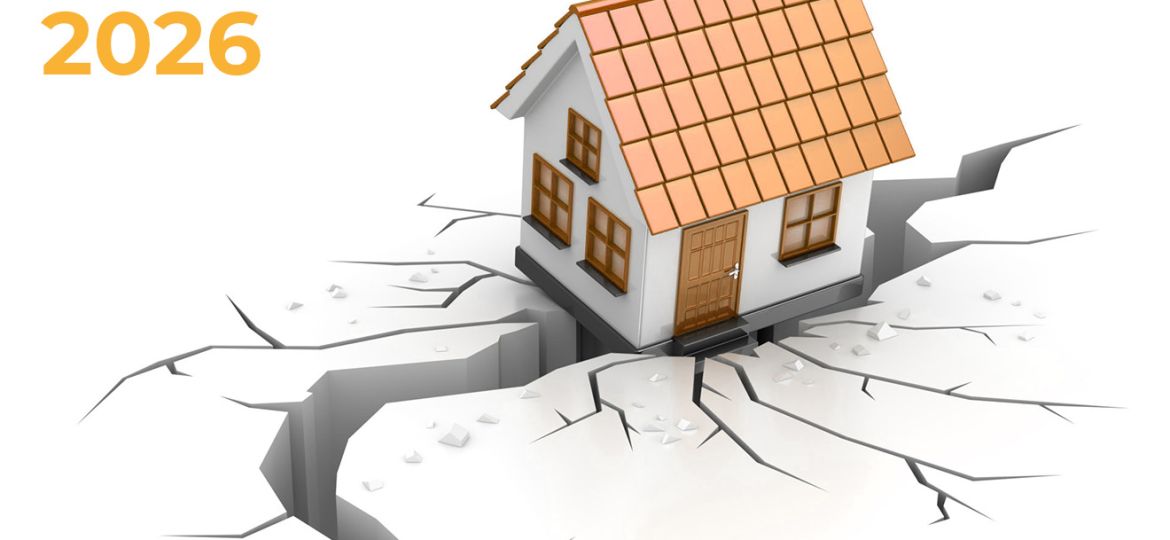
In 2026, the earthquake bonus will maintain the 50% rate for first homes and 36% for homes other than first homes and non-residential properties.
The draft Budget Law for 2026, approved by the Council of Ministers last week and submitted to Parliament, has extended by one year the more favorable conditions in force in 2025 for tax deductions for earthquake-proofing and the purchase of earthquake-proof properties.
The earthquake bonus for works (Article 16-bis of the TUIR) will therefore remain in force for 2026, with a 50% deduction for first homes and 36% for others;
Without this regulatory intervention, from 1 January 2026 the rates would have dropped to 36% for first homes and 30% for second homes, as foreseen by the sliding scale regime introduced in 2024.
Earthquake bonus for works 2026
The earthquake bonus for seismic safety measures on buildings has a fixed rate for all seismic work, but varies based on the property on which the work is carried out.
As in 2025, in 2026 the earthquake bonus for construction will have a rate of 50% for first homes and 36% for homes other than first homes and non-residential properties.
Unless further changes are made, in 2027 the earthquake bonus rate will drop to 36% for work carried out on primary residences and to 30% for work carried out on non-primary residences and other types of properties.
For now, the spending cap rule introduced in 2025 remains in place: for individuals with a total income of up to 75,000 euros, the spending cap on which to calculate the deduction is 96,000 euros.
For taxpayers with higher incomes, the amount of tax deductions is, however, “personalized.” Starting in 2025, subject to the specific limits set by each tax relief provision, for individuals with a total income of more than €75,000, the total deductible expenses considered are eligible for deduction up to an amount calculated taking into account the number of children and the presence of children with disabilities.