

Private/MANTUA
March 10, 2022
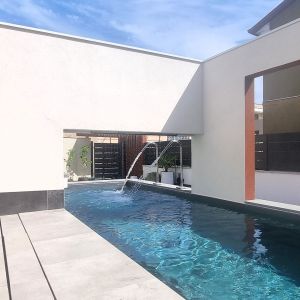
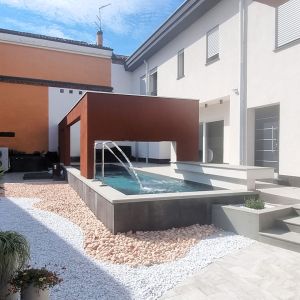
Feasibility study with 5 design proposals to the client, definitive project, executive design, construction management, site safety, testing, cost evaluation, client management in aesthetic and interior design choices, design of outdoor spaces and swimming pool
€440,000
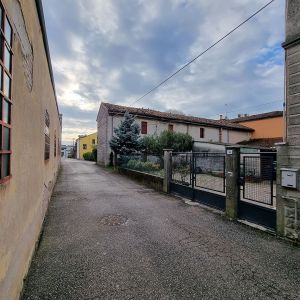
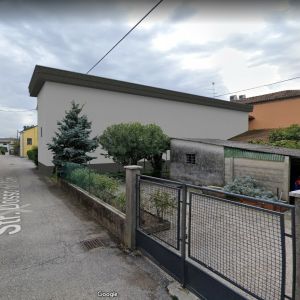
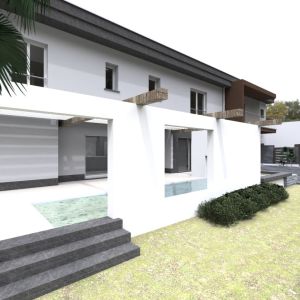
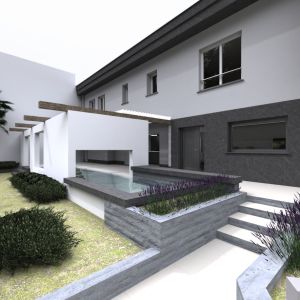
The project concept was developed from an analysis of the urban context, the layout of the lot, and the existing building’s footprint. Indeed, the idea of creating more green spaces on the lot, including private parking, and improving energy performance and seismic safety will ensure the development of urban regeneration in the area, while meeting simple, contemporary technical/performance and aesthetic requirements.
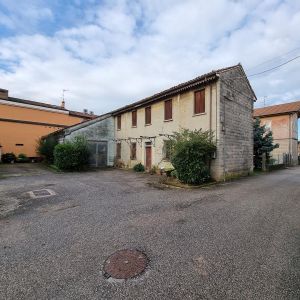
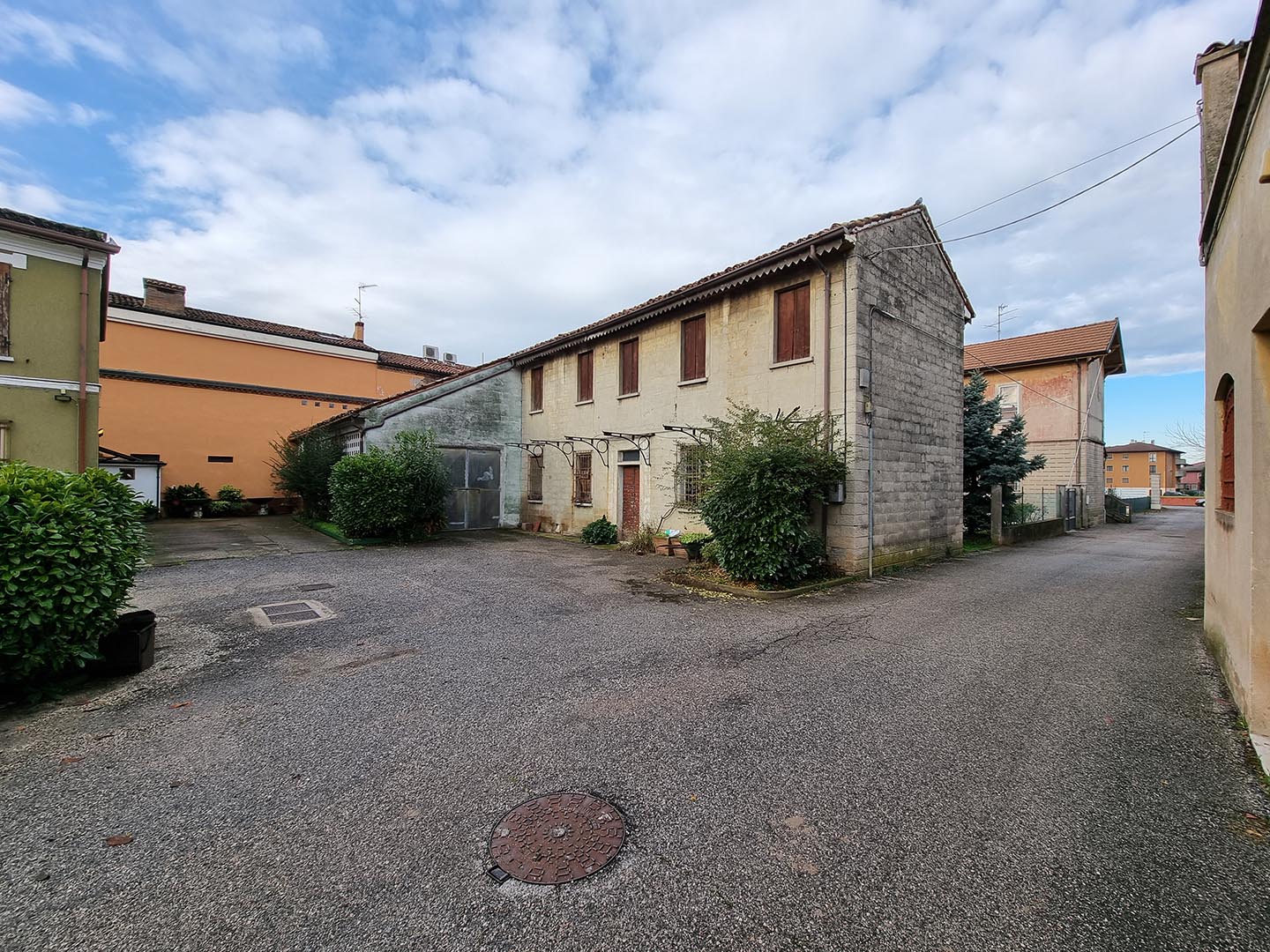
The project will involve a building renovation pursuant to Presidential Decree No. 380/2001, Article 3, paragraph 1, through the demolition of a building consisting of two units and the reconstruction of two appurtenances and a garage. The project will achieve energy efficiency requalification through “energy efficiency incentives, earthquake bonuses, photovoltaic systems, and electric vehicle charging stations” pursuant to Article 119 of Legislative Decree No. 34 of May 19, 2020, Law No. 77 of July 17, 2020, and subsequent amendments.
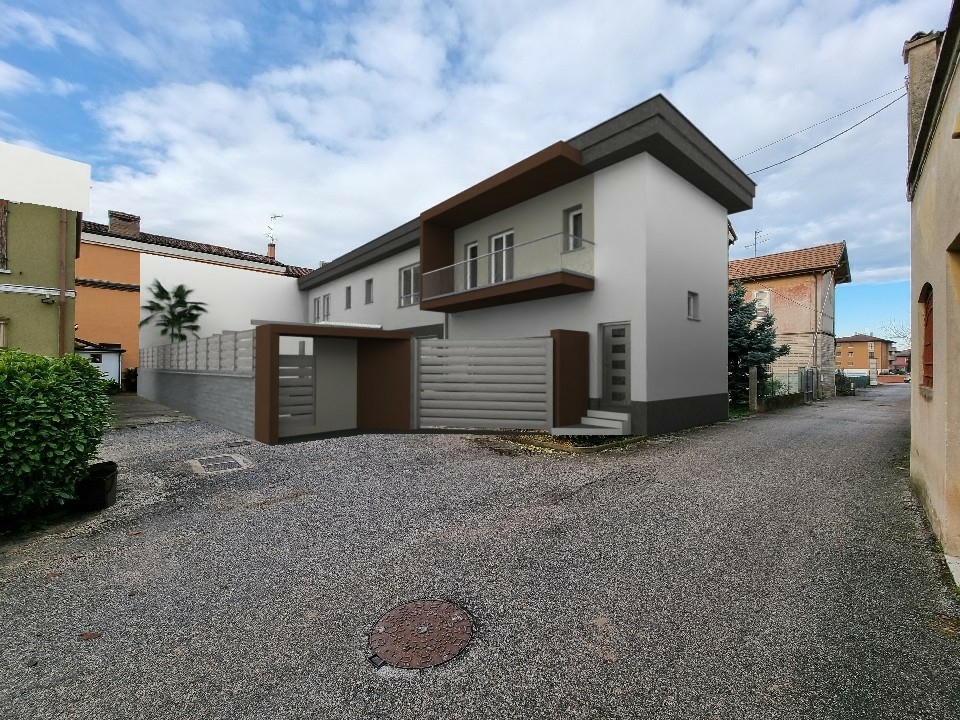
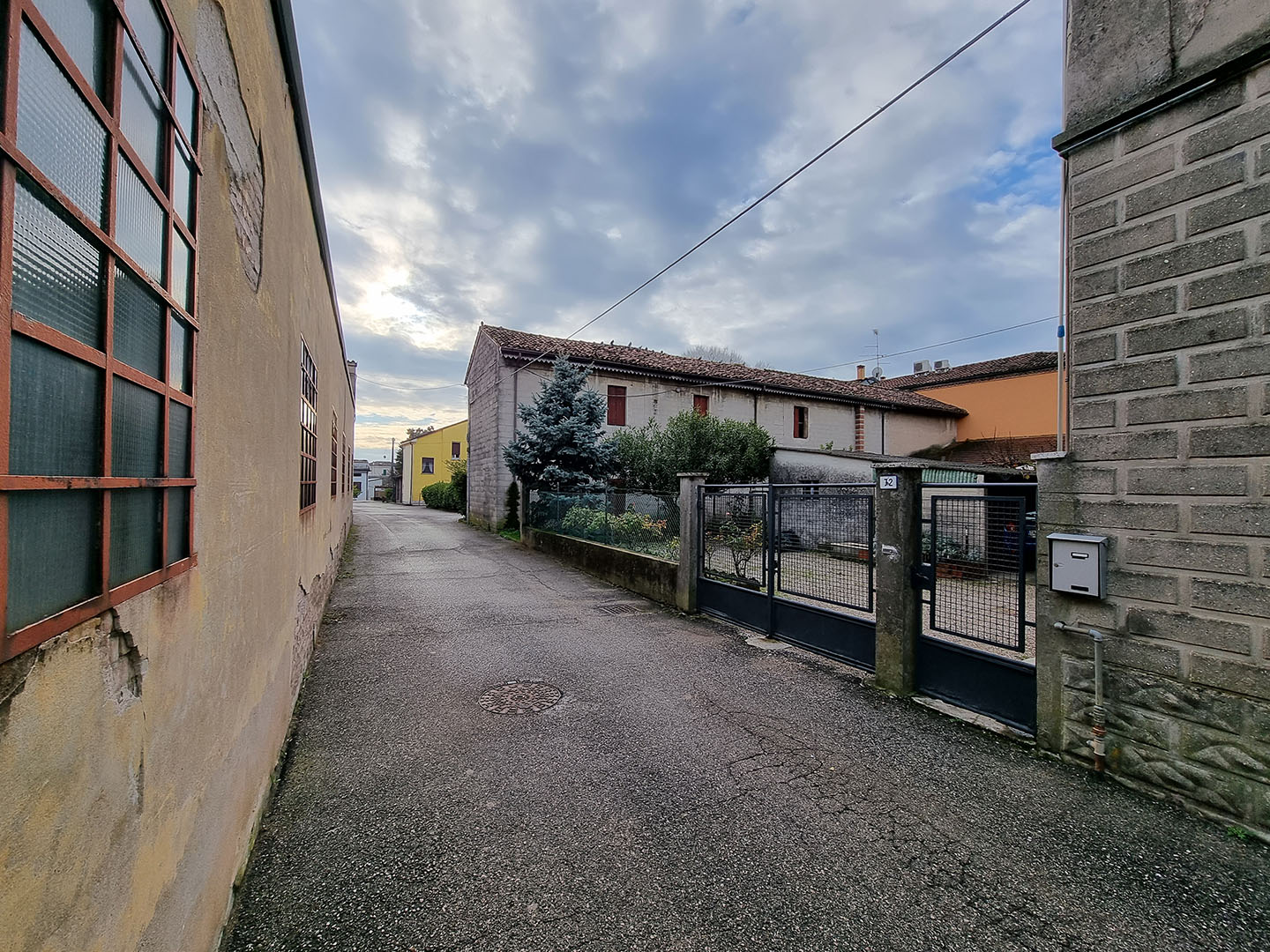
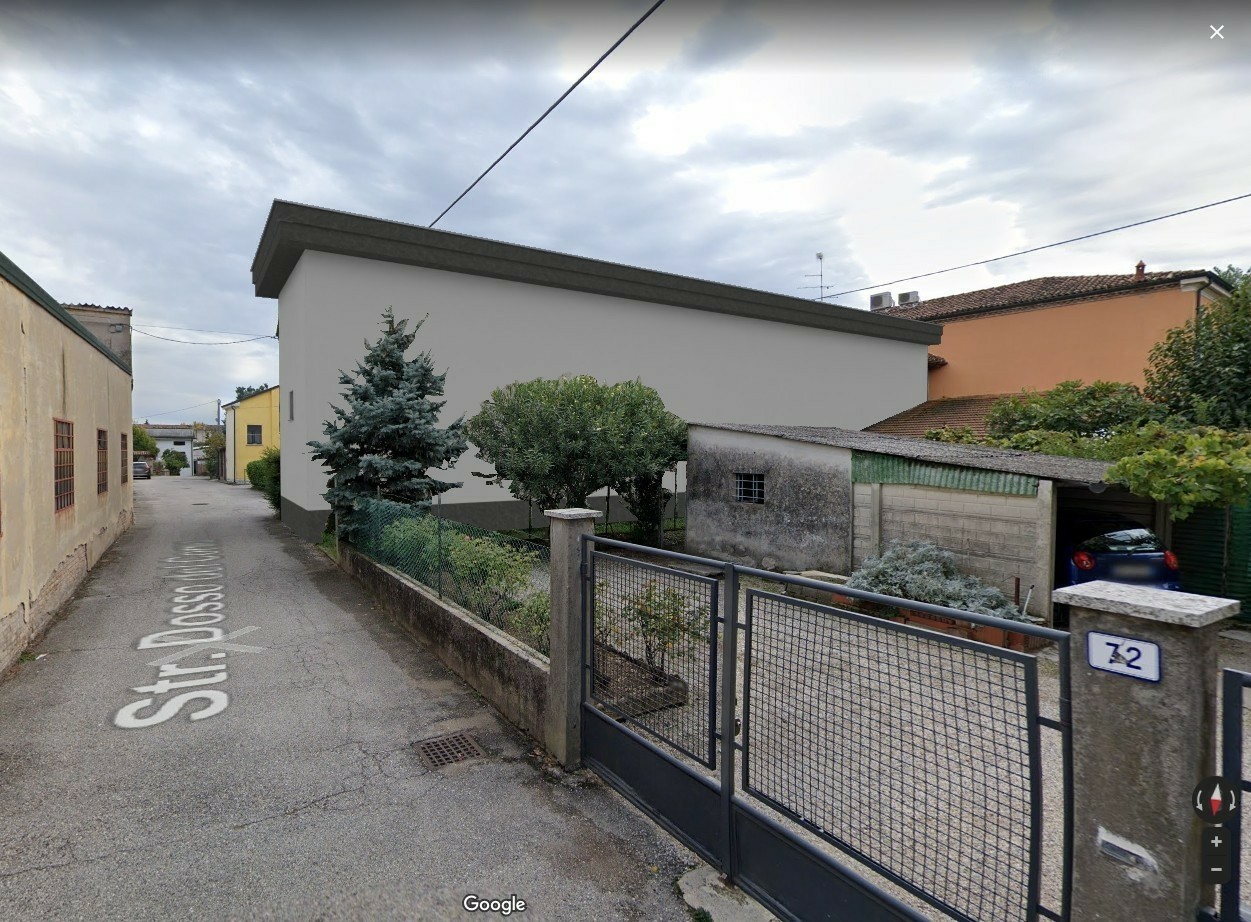
The demolition and reconstruction of the existing building, which was dilapidated, unsafe, and inadequate to the energy standards of the contemporary city, almost forced the client to undertake a radical intervention. However, the “new” volume of the building was proposed only along the northern edge, respecting the heights and the existing shape but “eliminating” part of the volume from the southern facade, creating more open spaces in front of the building and lightening the volume of the new building compared to the footprint of the existing building.
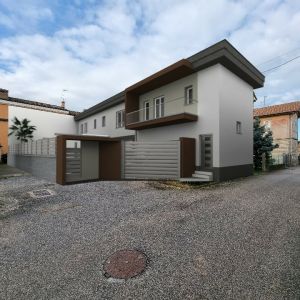
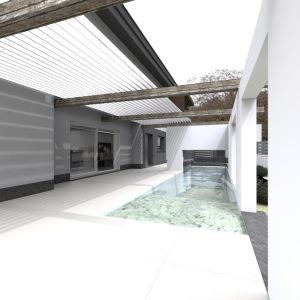
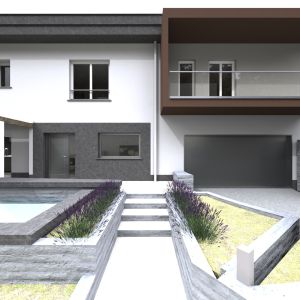
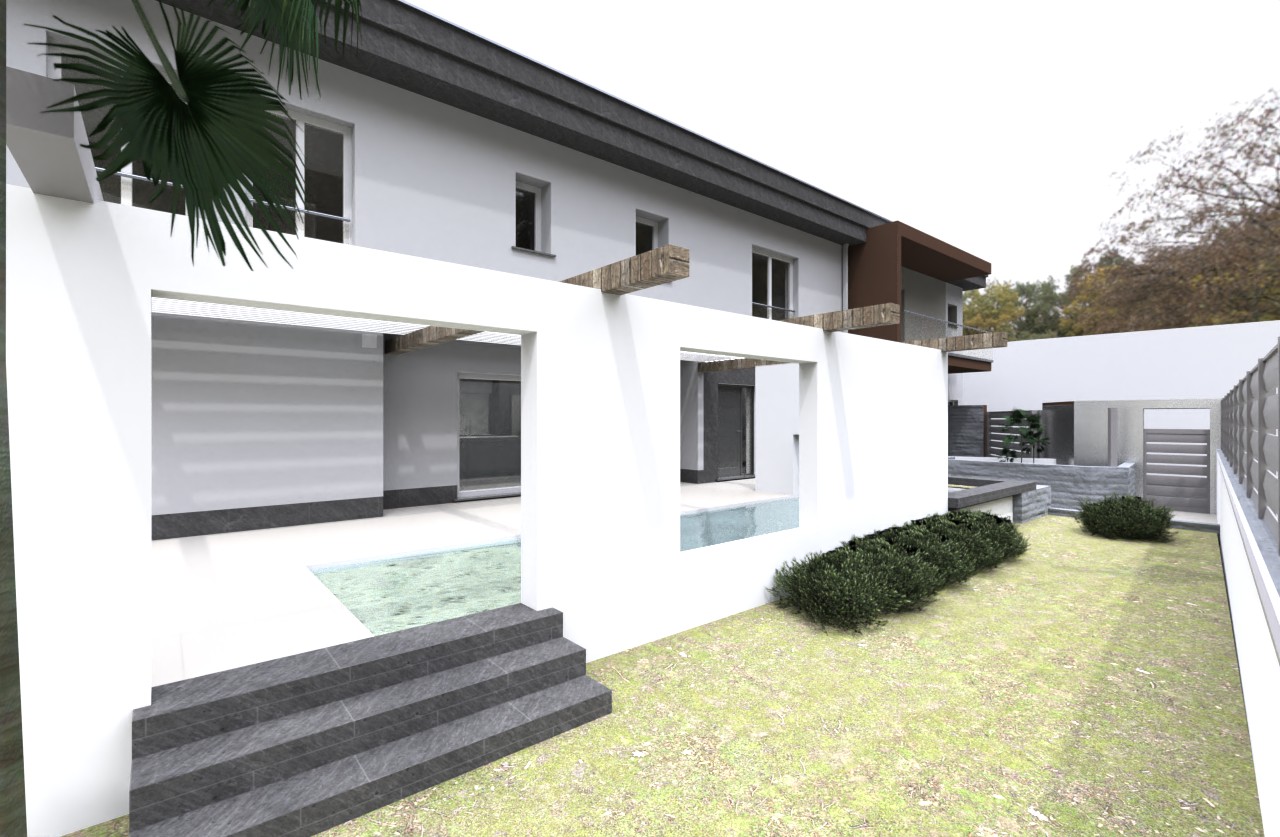
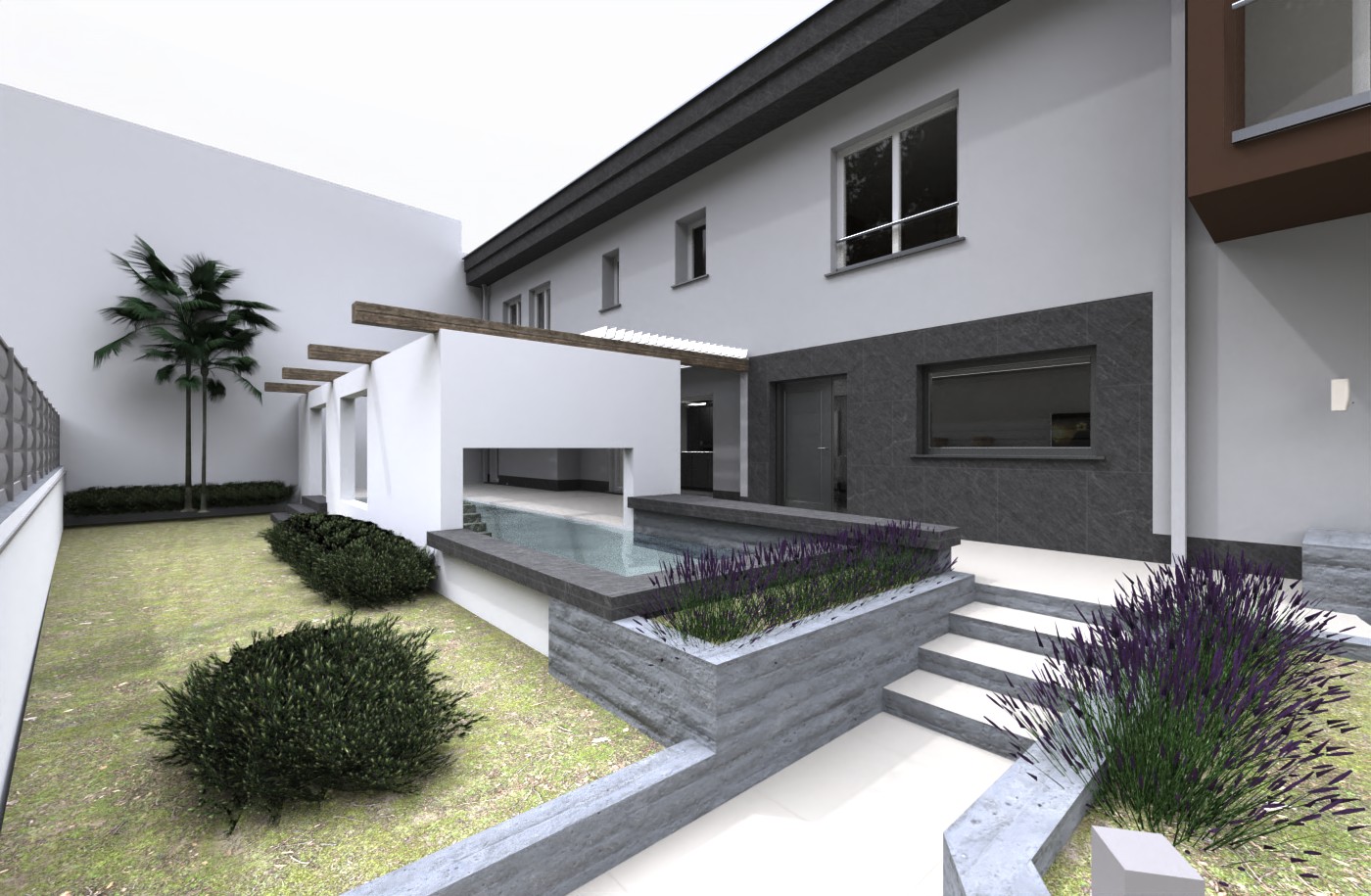
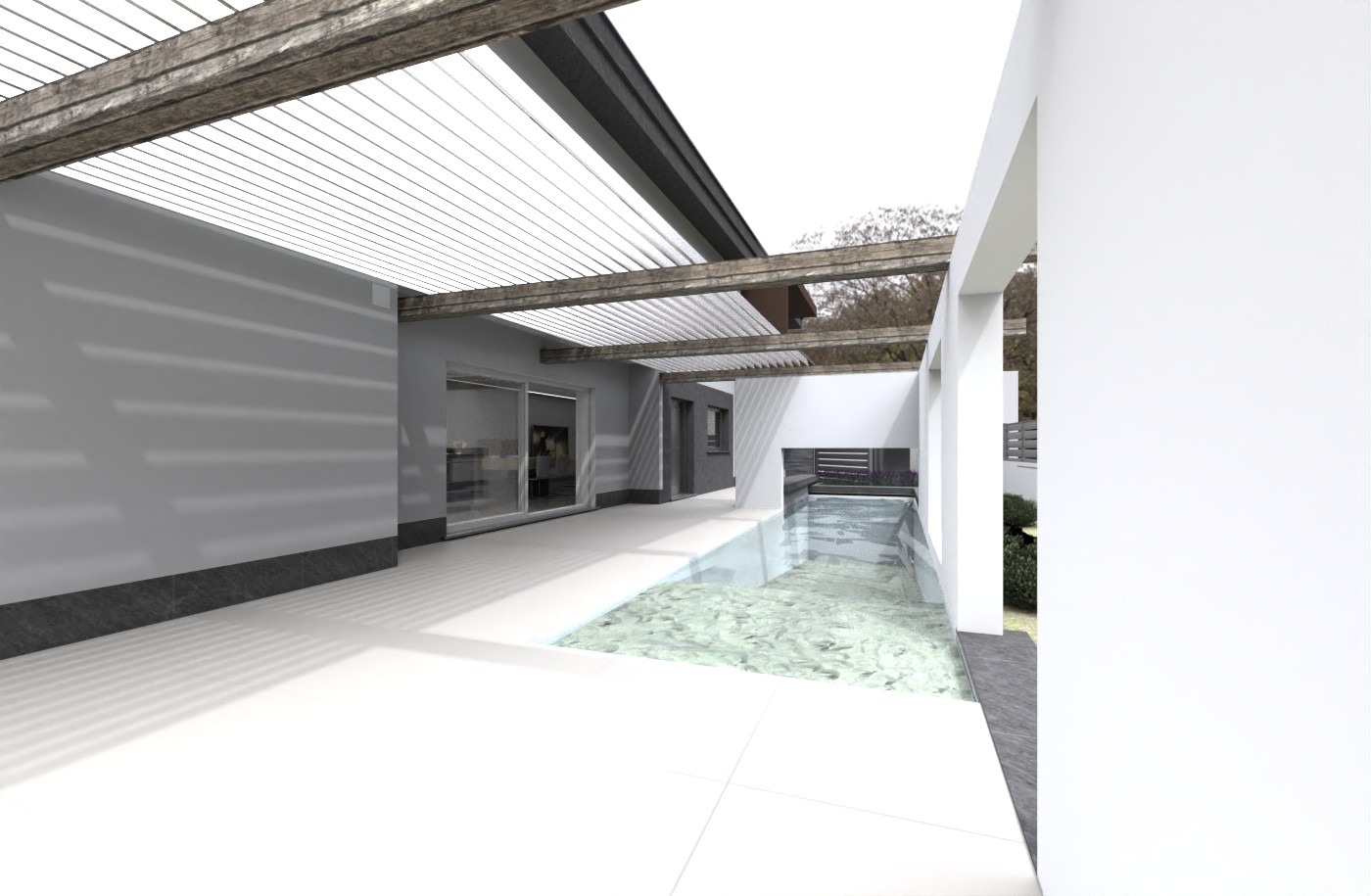
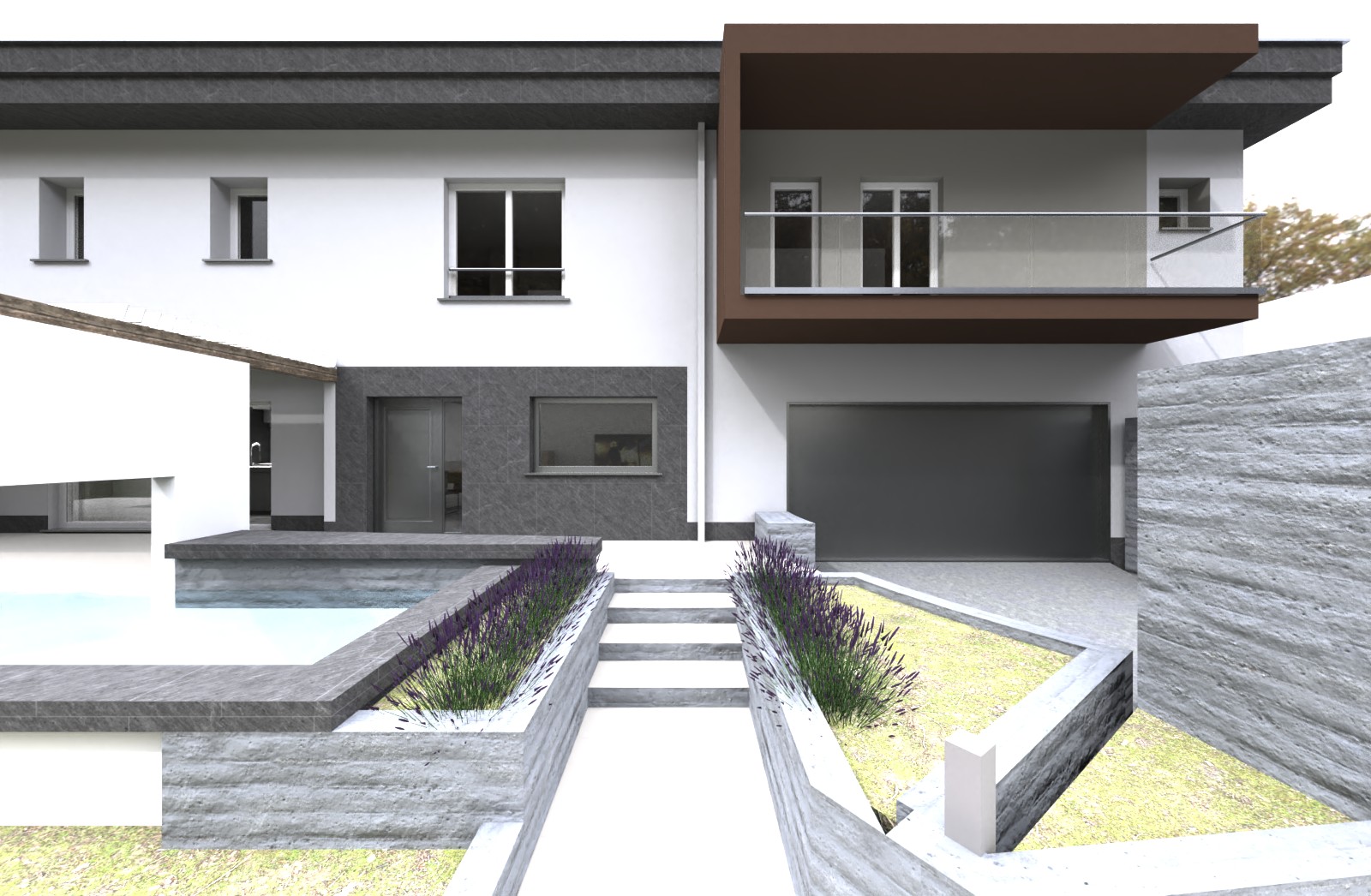
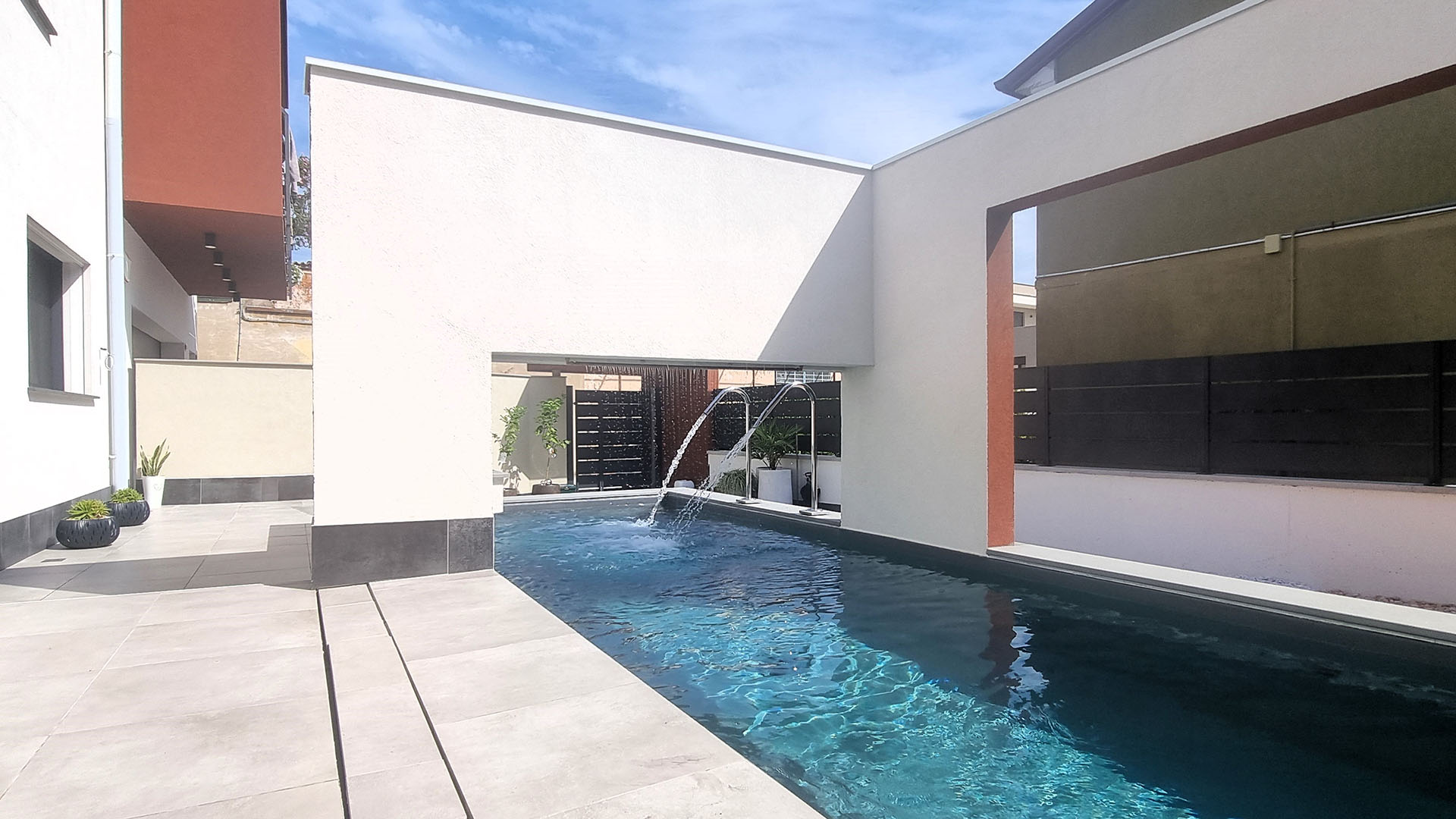
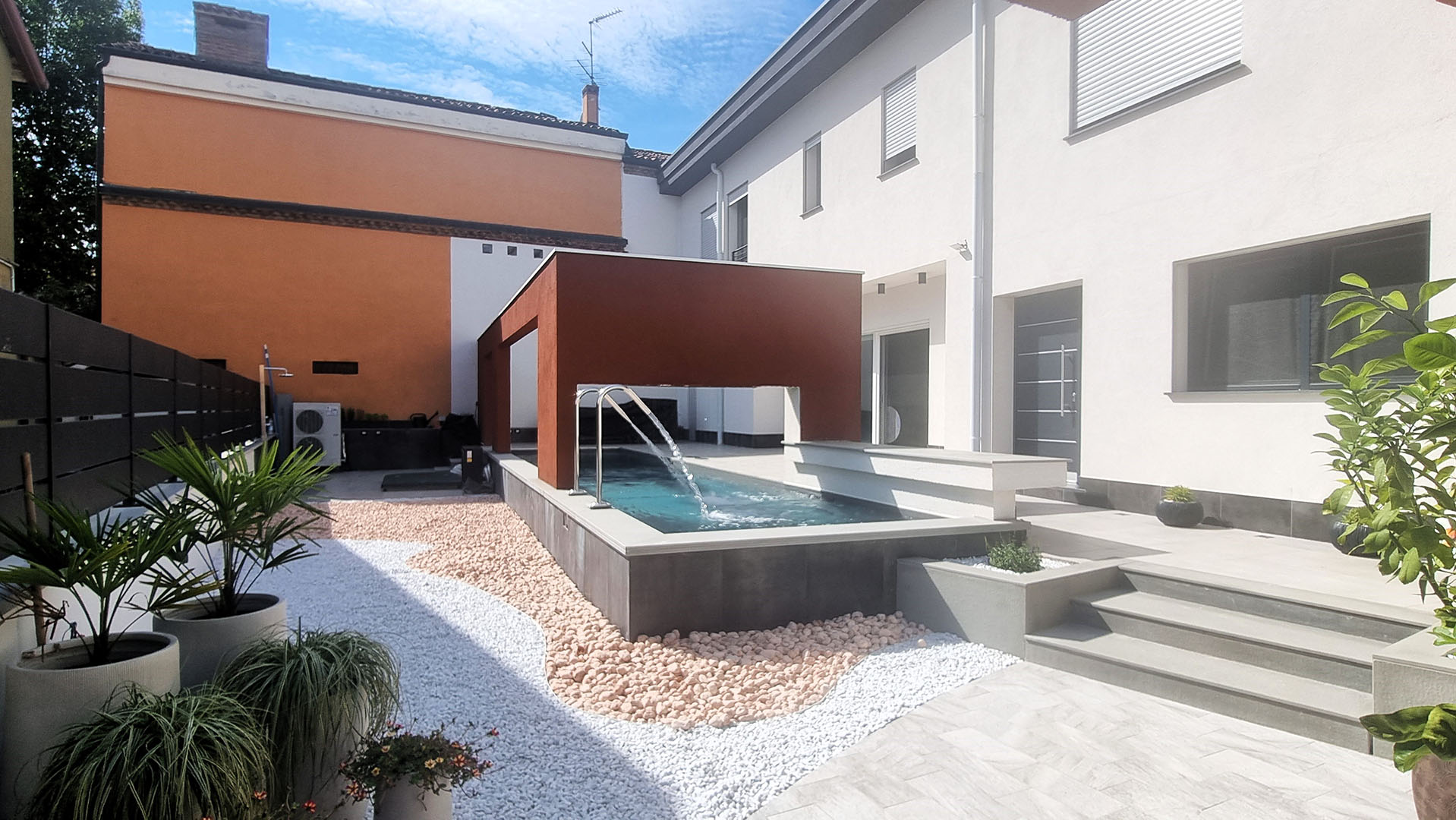
The new building, thus conceived, blends in well with the existing neighboring one, freeing up the space in front, thus favoring open spaces, giving rise to the creation of an appurtenant outdoor garden, and two parking spaces in a covered garage.
To respect the existing site area and legally established distances, the building unit fits harmoniously with the surrounding buildings, remaining lower than the neighboring buildings, yet giving the project more character and a more contemporary feel.
The ongoing decision to replace the proposed roofing, already authorized in the PDC n°3357/22, with a non-usable flat roof arose primarily from the need to maintain the height of the building below the existing gutter of the adjacent building. This was also undoubtedly due to the need to ensure greater insulation of the insulation package of the heat-dissipating surfaces towards the ground (with an insulated foundation cavity) without the need for underground excavations and more costly foundation and protective works, thus respecting the environment and minimizing the production of aggregates from foundation excavations. The inter-storey and roof slabs to be constructed will also be constructed using recent technologies (but with greater thicknesses) to ensure high energy performance.
1. Morphological and typological impact: The project’s volumes are significantly smaller than the existing building, fully respecting the building’s existing profiles and alignments with respect to its boundaries. The flat roof will be significantly lower than the ridge height of the existing building, without actually altering the relationship between the existing and adjacent volumes of the new project.
2. Linguistic impact: style, materials, colors: The use of neutral and light colors for the facades has a very low impact on the urban context of the neighboring buildings, bringing greater brightness also to the relationship between the pre-existing volumes.
3. Visual impact: The visual impact of the entire building would be low as the designed property fits into the already urbanised context without altering the shapes and volumes of the pre-existing building, indeed it would significantly alleviate its load and impact on the context.
adjacent in the relationship between the adjacent and bordering volumes, freeing up the space in front of the building by creating green and equipped spaces to serve the residence.
4. Environmental impact: The use of contemporary materials that meet the Minimum Environmental Criteria and the adoption of systems that exploit renewable sources will ensure the new building’s low environmental impact.
5. Symbolic impact: The project envisions reducing the volume of the existing building to create “new” green and equipped spaces serving the residential property, ensuring greater living comfort in a place that is almost devoid of identity and has been abandoned for years, characterized by residential buildings in an advanced state of disrepair.
ENERGY EFFICIENCY
The plan is to build a “nearly zero building class” in accordance with current regional regulations.
A building can be defined as a “nearly zero-energy building” if the following are simultaneously respected:
• all the requirements set out in letter b) of point 6.13 of Annex 1 of the implementing decree of DGR 3868 of 17.7.2015
• the obligations to integrate renewable sources set out in letter c) of point 6.13 of Annex 1 of the implementing decree of DGR 3868 of 17.7.2015.
The flat, non-usable terrace roof (subject to a change of plan), in particular, will house the solar thermal and photovoltaic systems serving the two homes. Furthermore, an electric charging station will be installed near the garage, as well as a storage facility for the energy accumulated by the photovoltaic systems.